GNTA
  • GNTA
    • Mission Statement
    • Executive Board
    • Delegate Assembly
    • BRC, BCG, & SDM
    • Staff
    • NYSUT RA
    • Benefit Trust Fund
    • Financial Aid Fund
    • Affiliates
    • Constitution & Bylaws
  • Information
    • GNTA Calendar
    • District Calendar
    • Forms
    • Legal Services
    • Financial Planning
    • APPR
    • Know Your Contract
    • Important Contract Dates
    • TAC Guidelines
    • Tutoring Directory
    • Contact Form
    • Links
    • History >
      • 75 Years Strong
      • Video: A History of GNTA
  • New Members
  • Retirement
  • Professional Development
    • Inservice Institute
    • Teacher Center
    • Summer Scholarship
  • Community Advocacy Network
    • Community Advocacy Network
  • Social Committee

As students return, the deaths of at least six teachers from covid-19 renew pandemic fears

9/11/2020

 
By Katie Sheppard, Washington Post

Teachers had just returned last month to prepare for the fall semester at John Evans Middle School in Potosi, Mo., when 34-year-old AshLee DeMarinis started to feel ill.
DeMarinis had been worried about returning to work at the rural middle school, where she was starting her 11th year of teaching. She had asthma, which put her at a higher risk for complications from covid-19 despite her young age.
“She was scared,” her sister, Jennifer Heissenbuttel, told The Washington Post.
Three weeks later, DeMarinis died in the hospital after testing positive for the novel coronavirus and suffering from complications caused by the infection.
DeMarinis isn’t the only teacher to die amid the pandemic as children return to schools across the United States. Educators in Missouri, Mississippi, South Carolina, Iowa and Oklahoma have died as the fall semester started in their districts.
It isn’t clear whether any of the teachers were infected at school, and many quarantined to avoid exposing students and other staff members. But their deaths have renewed fears that school campuses will become a breeding ground for the virus, spreading the illness as communities grapple with how to balance the need to educate children with properly addressing the pandemic.

School districts and state officials have struggled to find the right coronavirus precautions. In Georgia, one school district was forced to send hundreds of people home to quarantine after just one day of school prep on campus. Another district in that state ordered 900 children and staff to quarantine after being exposed to the virus during the first week back in class.
DeMarinis was an avid crafter who spent her summer at a lake with her sister and her nieces. When she returned to school on Aug. 10, she was concerned about the pandemic, her sister told The Post, but she got to work readying the classroom for her students who were set to start classes in a few weeks.
“She taught special education, and it was just her calling,” her sister said. “Her students loved her and her colleagues loved her.”

DeMarinis initially thought she had an ear infection when she started to feel sick on Aug. 14. But her condition worsened quickly, and by Aug. 19 she tested positive for coronavirus. She died on Sunday after three weeks on a ventilator at the hospital.

Nationally, at least five other teachers have died since early August.
This week, Demetria “Demi” Bannister, a 28-year-old third-grade teacher in Columbia, S.C., died from complications of the coronavirus, the State reported. On Sunday, Tom Slade, a 53-year-old high school history teacher in Vancleave, Miss., died of the virus, the Sun Herald reported.
Nacoma James, 42, a beloved football coach in Oxford, Miss., died in early August during the first week back on campus for his students. He spent the summer coaching at football practices until he was forced to self-quarantine after developing coronavirus-like symptoms, Mississippi Today reported.

The deaths have disrupted the start of the fall semester for many schools, and left students mourning their favorite instructors and role models.

“It’s like a gut punch really,” one of Slade’s students, Chase Hall, told WLOX. “He was a man I respected. I looked forward to him coming back to the classroom, and then he was gone.”
Stay safe and informed with our free Coronavirus Updates newsletter
Some districts have also been struggling to comply with quarantine requirements as staff and students test positive for the virus. Two days after children returned to classes in Tahlequah, Okla., school district officials confirmed special education teacher Teresa Horn, 62, died on Aug. 28 from a heart attack after testing positive for the coronavirus, KTUL reported.
“It is with a heavy heart that I announce the passing of one of our teachers,” Tahlequah Public Schools said in a statement. “Losing a member of your family is never easy and in the current climate, it makes the situation even worse.”

Tahlequah Public Schools sent students home for two days of virtual classes following Horn’s death. In a little over a week since, the district has reported at least eight students and staff members have tested positive and dozens have been forced to quarantine after possible exposure to the virus at school.
Even in districts that have committed to virtual classes, keeping kids off-campus is no guarantee the virus won’t spread among staff members.
A week before virtual classes were set to start in Des Moines, a teacher died after testing positive for the virus, sparking additional fears in a district that has been battling with state leaders over a statewide mandate requiring at least 50 percent of classes to involve in-person instruction.
“This death has shook many teachers in the district to our cores and underscores the importance of our district having the authority to keep our students, staff and community safe based on local health conditions,” Josh Brown, president of the Des Moines Education Association, told the Des Moines Register.
State health, education officials speak of hurdles to reopening schools

8/6/2020

 
by Jesse Coburn, Newsday
​
Inadequate supplies, infrastructure and funding are hampering efforts to safely reopen schools or resume remote learning this fall amid the threat of the coronavirus, New York State health and education officials said Wednesday.

Limited numbers of rapid coronavirus testing devices, spotty internet access and lengthy back-orders on electronic equipment for remote learning are among the challenges officials listed in a virtual discussion with the State Senate Education Committee.

The discussion came as lawmakers and educators await Gov. Andrew M. Cuomo’s announcement, due this week, on whether schools can reopen. New York’s education and health departments released guidelines on school reopenings last month, and school districts last week submitted their own reopening plans to the agencies for review.

State Health Commissioner Howard Zucker expressed little confidence that rapid coronavirus testing would be possible at schools, owing to shortages of the machines that process the tests.
“We’re not there,” he said. “Until the manufacturing of these devices and the manufacturing of this equipment is revved up, I don’t see us getting there.”

Another thing in short supply: equipment for remote learning.

“Every school district in the country is looking for devices,” said Phyllis Morris, the state education agency’s chief financial officer. “There’s just some supply chain challenges.”

Kimberly Young Wilkins, the agency’s deputy commissioner, said some districts placed orders for such equipment in the spring and still have not received it.

Officials stressed the need for federal leadership and assistance in tackling such challenges. Zucker said there should have been a nationwide strategy for addressing the shortage of testing equipment.

Dan Fuller, an assistant secretary for education in Cuomo’s administration, said the federal government should help cover school districts’ COVID-related costs.

“These expenses that schools and other sections of our economy are facing are essentially unprecedented,” he said. “This is the sort of thing that we need the federal government to provide the funding for.”

The discussion among the senators and state officials began shortly after two teachers unions released statements demanding New York require a school to close for 14 days if anyone there tests positive for the virus.

“This is no time to take risks,” read the statement from Andy Pallotta, president of New York State United Teachers. “If the state allows school buildings to reopen, districts must be prepared to close them in the event of a positive case.”

The appeal comes as concern mounts among teachers nationwide about the safety of reopening schools amid the pandemic.

“There is no room for error,” Michael Mulgrew, president of the United Federation of Teachers, said Wednesday in his statement. “New York City’s reopening ‘plan’ lacks specifics on what happens if there’s a positive case. The state must step in for the sake of New York City students, educators and families, and those across the state.”

The safety of teachers — and of students and staff — was a focus of the senators and state officials Wednesday. Fuller said school districts must accommodate teachers who may not feel comfortable returning to in-person instruction.

Shannon Tahoe, interim commissioner of education, also said the state hopes to offer training to teachers who found remote instruction challenging.

Another hurdle to distance learning, officials said, is limited internet access in some communities.
“If we don’t address this soon, these kids are going to be having severe academic deficits going forward,” Tahoe said.

With the traditional first day of school approaching, senators expressed frustration that there was not more clarity on how and whether schools will reopen.

School districts feel “there is no clear direction from State Ed of what to do,” said State Sen. Monica Martinez (D-Brentwood).Districts “are so frustrated that they are not getting any type of response for them to move forward.”

Zucker called reopening schools critical but urged caution about the process.
​
“Above all we must keep children, teachers and the staff safe. An ill-prepared reopening could put students, staff and parents in peril,” he said.

Most Teachers Concerned About In-Person School; 2 In 3 Want To Start The Year Online

8/6/2020

 
As the school year starts in many districts across the country, a new national poll of teachers from NPR/Ipsos finds overwhelming trepidation about returning to the physical classroom.
Eighty-two percent of K-12 teachers say they are concerned about returning to in-person teaching this fall, and two-thirds prefer to teach primarily remotely. On the latter point, teachers are aligned with parents and the general public: Another recent NPR/Ipsos poll found two-thirds of respondents thought schools in their area should be primarily remote, including 62% of parents of children under 18.
The teacher poll was conducted July 21-24 and included 505 respondents. Half teach at low-income schools.
When it comes to going back to the classroom, 77% of teachers are worried about risking their own health. Robin Stauffer is one of them. She's taught high school English for four decades, most recently in Katy, Texas, a suburb west of Houston. She says working with kids has kept her young and lighthearted, and she has a strong sense of mission "to be the type of teacher that I wish I would have had when I was in public school, to kind of right the wrongs that I experienced."

Listen to the full story on NPR.

Teachers deserve more respect

3/22/2020

 
Their struggles were hard enough before the coronavirus outbreak. The pandemic hasn’t helped.

by Alexandra Robbins


LeVar Newsom is a full-time physical education and health teacher in San Antonio, but his workday doesn’t end when the bell rings at 3:20 p.m. On days when he’s not coaching football, soccer or basketball, he drives straight to his job as a carpet cleaner, where he works from 4 p.m. to 7 p.m. Then he goes home to grade papers and prepare lessons. Until recently, he also worked a night shift as a hospital technician — 10:45 p.m. to 6:45 a.m. — before returning to school by 7:15 a.m. He barely saw his wife and two young daughters.
In January, Mr. Newsom’s doctor, concerned about his high blood pressure, told him to quit the night shift or risk having a stroke. Mr. Newsom left that job, but his physical and emotional struggles remain as he tries to figure out how else to supplement a salary of about $30,000 (after taxes and insurance payments). At various times his water and cellphone service have been cut off. He suspects he has torn ligaments in his knee but is reluctant to have it examined because he needs to keep working.
“I’ve shed a tear or two,” he admits. “I’m always thinking, How am I going to feed my family?”
If things don’t change after the 2020 presidential election, Mr. Newsom says, he doesn’t know what he’ll do. He’s not alone. Teachers across the country tell me that for them and their profession, the stakes of a presidential election have never been higher. While former Vice President Joe Biden and Senator Bernie Sanders are both courting the teacher vote, teachers wonder whether either candidate can repair the damage the Trump administration has done.
President Trump and his education secretary, Betsy DeVos, have been, in the words of a Nebraska teacher, Patrick Fielder, “the most toxic thing ever to happen to public education.” Not only have they belittled teachers and schools; they have also fought to eliminate civil rights protections in schools; to cut funding to reduce class size, teacher training and support; to make it easier for students to get away with sexual assault and harassment; and to put guns in schools. Mr. Trump and Ms. DeVos have repeatedly pushed to divert billions of dollars from public schools to private programs that studies show don’t help students.
​
Many Americans are not aware of how bleak the education landscape in this country has become. A 
recent national poll asked Democratic voters which candidate would best handle health care, climate change, foreign policy and immigration. The survey made no mention of education. “Teachers feel more voiceless than ever,” said Julia Rion, a South Carolina elementary school librarian. “There’s a lack of community support and understanding of how difficult it can be to serve children’s educational, emotional and psychological needs.”And now teachers have new concerns about the administration’s slow response to the coronavirus pandemic and the unnerving challenges they face as a result. Before most schools closed, teachers were among the groups most at risk of exposure to the coronavirus. I spoke to an Idaho high school English teacher who had to work on Monday despite having a chronic health condition and a weak immune system. She said officials in her school district, which closed on Tuesday, had wanted schools to stay open so that parents could continue to work. “But teachers aren’t babysitters,” she said, “and schools aren’t day care.”
Over the past decade, the national average teacher salary has dropped 4.5 percent, adjusted for inflation, according to the National Education Association. In 2018, the Economic Policy Institute reported that teachers are paid 21.4 percent less than professionals with similar education and experience — a record-high pay gap, and a major reason the national teacher shortage is increasing.
Challis Young, a 31-year-old Oregon high school teacher, told me that in recent years she has seen more than 10 teachers her age quit because of long hours and low pay. “Teachers are drowning,” she said. “High school students see their teachers struggle, especially in our small town, and they don’t want that life. How are we supposed to attract talented and professional employees?”
A 2019 Phi Delta Kappa poll found that about half the country’s public schoolteachers — and 61 percent of high school teachers — had seriously considered quitting the profession in the past few years. Further, 75 percent of teachers reported that their community schools were underfunded, 60 percent said they were unfairly paid and 58 percent would vote to strike for more school funding.

The St. Paul strike was the latest walkout in the thriving “
Red for Ed” teacher protest movement, which teachers began in 2018 to demand greater public-school funding and improved teacher benefits and pay. The strikes fortunately have begun to show results in some states. Surveys show that when teachers strike to protest school funding cuts and low salaries, they boost public support among both Democrats and Republicans for raising teacher pay.Many teachers already are striking. Last week, teachers in St. Paul, Minn., walked out for the first time since 1946. They asked the district for more special-education teachers, multilingual staff members and in-school mental-health professionals, and for a salary hike. The union ultimately settled for less because of the coronavirus pandemic.
But it shouldn’t take strikes to persuade the public and lawmakers to treat teachers better. Teachers are among the most vital, hardest-working, passionate and selfless members of the work force — yet they are also among the most disrespected, underappreciated, overworked and underpaid.
When I asked teachers what they wanted the next administration to address, the most frequently mentioned issue — along with decreased class size and increased mental-health resources and support staff for students — was restoring respect for teaching as a profession. “I will be voting for whichever Democratic candidate makes it to the ticket and Betsy DeVos is the No. 1 reason,” a Missouri special education teacher, Bridgett Blake, said. “When I started teaching in the late 1990s, teachers were not seen as idiots who couldn’t be trusted. We weren’t viewed as evil and lazy like we are now.”
Even before the coronavirus outbreak, the working conditions at many schools were inadequate at best. Teachers in several Philadelphia schools must bring their own toilet paper and paper towels to work. Maryland’s largest school district grants teachers only two days of paid maternity leave — and no paid days for adoptive leave, paternity leave or other family leave. A Utah high school teacher told me she taught seven English classes last year, most of which had 40 to 45 students.
One of the largest sources of teachers’ workplace stress and anxiety has been a lack of resources — human and financial — for special education and for students learning English. Challis Young told me that in a sophomore history class, she could have a student at a third-grade reading level, a first-year English learner, a student with an unstable home environment, a significantly advanced student, a student needing emotional support for autism — and two dozen other students with varying strengths and weaknesses.
The coronavirus introduced new obstacles and dangers. “Kids sneeze, cough and don’t cover their mouths,” said Suzanna Jackson, a third-grade teacher at a low-income school in California. “And they touch everything.” Ms. Jackson’s school didn’t close until Wednesday, while nearby cities were already sheltering in place. Ms. Jackson said that school officials discouraged teachers from using disinfecting wipes or sanitizers in their classrooms, citing concerns about exposing children to chemicals. “There are no disinfecting products that work against Covid-19 in our school that I know of,” she added.

Officials in some school districts expected teachers to show up even though schools were closed. Teachers in Fayette County, W.Va., originally were told to be at school weekdays for students’ questions, lesson planning and meal deliveries. “I have several immuno-compromised co-workers who are furious,” a teacher told me on Thursday — before district officials said teachers could go home after submitting grades. “I don’t want to go back until it’s safe. I struggled to keep my composure the last few days of school. Even my toughest kids were scared, terrified and looking to me for solace. I said everything will be all right but I’m not sure I was telling them the truth.”
When I asked Ms. Jackson on Tuesday why she was at school, she started to cry. “I come in anyway because they’re my kids,” she said. “I’m not going to leave my kids. I feel torn. I’m mad the district told us to be here, but my kids need me.”
Eventually, teachers will return to work. But without proper resources, enough time and adequate support staff, they will be hamstrung, desperate to reach all their students but unable to do so. “My hands are tied,” Ms. Young said. “I watch kids I know could be saved drop out, commit petty crimes, use drugs and make bad choices. We could fundamentally change the lives of millions of children, but we’re simply too overwhelmed to meet their needs in the way we know we should.”
LeVar Newsom is trying. As with many teachers, his heart is with his students, and he sacrifices his financial needs to focus on their well-being. He often hunts for donations for classroom supplies and clothes for students. Recently he provided shoes and football cleats to a student who owned only a pair of flip-flops. Despite his struggles, he has no plans to leave teaching.
“I didn’t have when I was growing up,” he said. “So I like being there for these kids because they don’t have. Seeing kids’ futures get brighter makes it all worthwhile. Teaching can be hard, but it makes my soul happy.”
Alexandra Robbins (@AlexndraRobbins) is the author, most recently, of “Fraternity: An Inside Look at a Year of College Boys Becoming Men.” She is writing a book about K-12 teachers.

OUR TEACHERS ARE NOT OK, WE KNOW THIS AND IF We don't, we should

3/22/2020


In State of the Union, Trump makes clear his aversion to public schools

2/5/2020

 
If for some reason you haven’t been clear about what President Trump thinks about traditional public schools, consider what he said about them in his State of the Union address Tuesday night.
There was this: “For too long, countless American children have been trapped in failing government schools.”
What’s a “government school” to Trump? A public school in a traditional public school district.
Then there was this, with a reference to a student in the audience: “Now, I call on the Congress to give 1 million American children the same opportunity Janiyah has just received. Pass the Education Freedom Scholarships and Opportunity Act — because no parent should be forced to send their child to a failing government school.”
Trump urged Congress to pass that legislation, which would create a $5 billion federal tax credit program that would fund scholarships to private and religious schools. The scholarships would be funded by individuals and businesses who want to privately donate but who would then receive a federal tax credit on a dollar-for-dollar basis.
Trump spent most of his education-related comments on the subject of “school choice,” which he and Education Secretary Betsy DeVos have put at the top of their education agenda. DeVos has said her chief priority was expanding alternatives to traditional public schools, which she once called “a dead end.”
Betsy DeVos and her allies are trying to redefine ‘public education.' Critics call it ‘absurd.'
DeVos and like-minded school choice supporters have long disparaged public schools as government schools, and they have been attempting to redefine “public education” to mean any school that receives any public funding. In this framework, a religious school that discriminates against LGBTQ students but accepts students who pay tuition with help from a program that uses public money would be considered public.
Much of the research on vouchers shows that private schools do no better and often worse in terms of student academic achievement than public schools. But DeVos has said her priority is in expanding school choice, not holding private schools to account for providing an excellent education.
Critics who oppose the privatization of public education slammed Trump’s education comments even before he finished delivering his speech Tuesday night.
Lily Eskelsen García, president of the National Education Association, the largest labor union in the United States, said in a statement: “Tonight, Donald Trump once again put the agenda of Betsy DeVos, the least qualified Secretary of Education in U.S. history, front and center in his State of the Union by renewing his push to divert scarce funding from the public schools that 90 percent of students attend into private school voucher programs.”
Randi Weingarten, president of the American Federation of Teachers, the second-largest teachers union, said in a statement: “Donald Trump and Betsy DeVos have made no secret of their antipathy for public education. Rather than strengthen the cornerstone of our democracy and the chief enabler of pluralism and opportunity, they choose to defund and destabilize it. No amount of rebranding vouchers and privatization as ‘choice’ and ‘freedom’ changes that.”

ADIn his State of the Union, Trump also called for more vocational and technical education in high school and mentioned the importance of the constitutional right for prayer in schools.While his education comments were a small part of his speech, they were significantly more than he offered in his 2019 State of the Union, which mentioned education policy in a single sentence.
Here’s the education-related text from the State of the Union speech, as provided by the White House:

"The next step forward in building an inclusive society is making sure that every young American gets a great education and the opportunity to achieve the American Dream. Yet, for too long, countless American children have been trapped in failing government schools. To rescue these students, 18 states have created school choice in the form of Opportunity Scholarships. The programs are so popular that tens of thousands of students remain on waiting lists. One of those students is Janiyah Davis, a fourth-grader from Philadelphia. Janiyah’s mom, Stephanie, is a single parent. She would do anything to give her daughter a better future. But last year, that future was put further out of reach when Pennsylvania’s Governor vetoed legislation to expand school choice for 50,000 children.

Janiyah and Stephanie are in the gallery this evening. But there is more to their story. Janiyah, I am pleased to inform you that your long wait is over. I can proudly announce tonight that an Opportunity Scholarship has become available, it is going to you, and you will soon be heading to the school of your choice!

Now, I call on the Congress to give 1 million American children the same opportunity Janiyah has just received. Pass the Education Freedom Scholarships and Opportunity Act — because no parent should be forced to send their child to a failing government school.

My budget also contains an exciting vision for our nation’s high schools. Tonight, I ask the Congress to support our students and back my plan to offer vocational and technical education in every single high school in America. To expand equal opportunity, I am also proud that we achieved record and permanent funding for our nation’s historically black colleges and universities.
My administration is also defending religious liberty, and that includes the constitutional right to pray in public schools. In America, we do not punish prayer. We do not tear down crosses. We do not ban symbols of faith. We do not muzzle preachers and pastors. In America, we celebrate faith. We cherish religion. We lift our voices in prayer, and we raise our sights to the glory of God!"

GNTA End of year party a smashing success!

6/6/2019

 
The annual GNTA Retirement reception was held on Wednesday, May 29 at Westbury Manor.  President James Daszenski, the GNTA Executive Board, building BRC chairs and colleagues from all buildings in the district were joined by District administration and members of the Board of Education to toast and celebrate the retirement of many stalwart Great Neck lifers. We wish our colleagues well (without any jealousy!) as they prepare for a life without lesson planning, grading and early wakeup calls.

so much for the labor union's funeral

1/30/2019

 
by Dana Milbank, The Washington Post

​Something funny happened on the way to the labor movement’s funeral.
When Justice Samuel A. Alito Jr. and his antilabor colleagues on the Supreme Court handed down the Janus v. AFSCME decision last June, unions braced for the worst. The American Federation of Teachers expected it might lose 30 percent of its revenue after the high court gave public-sector workers the right to be free riders, benefiting from union representation but paying nothing.
Instead, the 1.7 million-member union added 88,500 members since Janus — more than offsetting the 84,000 “agency-fee payers” it lost because of the Supreme Court ruling. And the union has had a burst of energy. There has been a surge of high-profile strikes by teachers’ unions in West Virginia, Oklahoma, Arizona, Los Angeles and elsewhere. Rallies, pickets and local campaigns mushroomed by the hundreds. The union has tallied 11 organizing wins since Janus, tripled its “member engagement” budget from 2014 and nearly doubled the number of voters it contacted in 2018.

“Alito put his thumb on the scales of justice for the anti-union ideologues,” says Randi Weingarten, president of the American Federation of Teachers. “It was a wake-up call to everyone. Everybody got engaged.”

Labor leaders ought to thank Alito — and send chocolates to the Koch brothers for bankrolling the anti-union court case. Their brazen assault, combined with President Trump’s hostility toward labor, has generated a backlash, invigorating public-sector unions and making a case for the broader labor movement to return to its roots and embrace a more militant style.
Unions had become ossified, serving as member-service organizations that offered workplace representation and collective-bargaining assistance but not much fire. Now, the existential threat posed by Janus hasn’t materialized — membership has held steady — and, instead, has spurred a renewal of activism.

The American Federation of State, County and Municipal Employees feared it could lose 30 percent of its revenue. Instead, the AFSCME reports that for every member becoming a free rider since Janus, it has gained seven new members. It has continued to notch organizing wins (220 since July 2016, resulting in more than 22,000 newly organized members). It has also trained more than 25,000 activists over the past three years to spread the union gospel.

“Folks were writing our obituary. They thought this was going to be our death knell. They failed,” Lee Saunders, AFSCME’s president, crows. “They overreached. Now we’ve got the momentum. We’re organizing like never before.”

Back in February, when the case was argued, I suggested the justices beware the unintended consequences of their actions, lest they revive labor militancy. Alito expressed no such worry. In his scornful majority opinion that jettisoned decades of precedent, he dismissed the “loss of payments” that would be “unpleasant” for unions.

Now, in the wake of Janus, we see that there wasn’t as much anti-union sentiment in the workforce as right-wing groups supposed. Many of the agency-fee payers, the ones whose free speech was allegedly compromised because they were “forced to subsidize a union,” as Alito put it, have become full members of unions instead of quitting. AFSCME reports that 310,000 former agency-fee payers have converted to full membership since 2014. (The anti-union plaintiff in the AFSCME case, Mark Janus, who before the ruling said “I love my job,” quit his state-government job right after the decision and joined a conservative think tank.)

Rank-and-file members, meanwhile, perceiving the threat to the union, have become more aggressive in recruitment. Workplace units have organically launched everything from social media campaigns and town-hall meetings to civil disobedience and full-blown strikes. And union bosses (who had years to prepare while Janus and a predecessor case worked their way through the courts) redirected resources from member services toward organizing, engagement and high-impact community campaigns.

The overall result: Instead of the feared 30 percent drop in membership, public-sector unions held their own in 2018, the Bureau of Labor Statistics reported last week. There was a total decline of just 83,000, or 0.7 percent.

Labor is still a long way from healthy, and more legal threats could blunt the renewed momentum. Lawsuits attempting to force unions to refund agency-fee payers retroactively could be ruinous. But the renewed energy following Janus points the way forward for labor: Success is to be found not in reinvention but in returning to its combative origins.

“The Koch brothers and their team . . . expected us to hide under the bed and shake in our shoes,” Lily Eskelen García, president of the National Education Association, tells me. Instead, “We stood up on soapboxes and stages and painted picket signs.”
​
The NEA had projected a loss of as many as 200,000 members, based on previous drop-membership campaigns. Instead, the 3 million-member union is actually up 13,935 members year over year — and the increase in membership among new teachers is particularly encouraging.
Credit the Kochs, and Alito, for that. Says García: “They shook us out of some complacency.”

NY legislators OK bill to change teacher evaluations

1/29/2019

 
ALBANY — State legislators approved a bill on Wednesday to alter New York’s teacher-evaluation process, continuing a fast pace set by the newly minted Democratic majority in the Senate.
Along with teacher evaluations, the Senate and the Assembly approved the so-called “Dream Act,” which would allow state college-aid programs to cover children of adults who are in the country illegally. The Senate also passed a measure Wednesday to make the state’s 2 percent property-tax cap permanent, but the Assembly hasn't approved it.

The teacher bill was not only a high-profile issue in the 2018 legislative session in Albany but also a factor in union campaign spending to successfully end Republican control of the Senate.
The bill would end the mandate that ties teacher evaluations to students’ scores on certain standardized tests. But even supporters acknowledged it doesn’t completely unlink exams and evaluations, leaving 50 percent of a teacher’s appraisal to some measure of student performance. That prompted some critics to say the bill would have little practical impact.

The exact measures would be a subject of school board and teachers’ union bargaining. Supporters said the bill, at minimum, puts the issue back in local officials’ hands.  “We are returning evaluations to local control and saying the use of assessments will be best determined at the local level,” said Sen. Shelly Mayer (D-Yonkers), sponsor of the bill.  At issue is a 2015 law, championed by Gov. Andrew M. Cuomo, that required 50 percent of teachers' annual job ratings to be based on their students’ test scores on state standardized tests.  But the fact that half of an instructor’s appraisal will be based on some sort of test or assessment had some lawmakers grumbling that the bill was less than advertised. 

“I liken it to the Charlie Brown cartoon where right as he is about to kick the ball, it gets taken away,” Assemb. Edward Ra (R-Franklin Square) said during the Assembly debate.
Others said any bill ending the link between assessments and evaluations would be likely to be vetoed by Cuomo. So they voted for this one, saying it’s the best practical step they could take.
“Let’s face it, if we completely repeal [the law], the governor will never stand for it and we could be moving on to something worse,” said Assemb. Andrew Raia (R-Huntington).
Sen. Andrew Lanza (R-Staten Island) called the bill “making another mistake” and Sen. Robert Jackson (D- Bronx) vowed to introduce a bill to change the 50 percent requirement. But they voted for the bill.

The Senate approved it, 60-0; the Assembly, 125-6. Assemb. Michael Fitzpatrick (R-St. James) and Ra were the two Long Island representatives who opposed it. A Cuomo aide said the governor's budget proposal, unveiled last week, includes a teacher-evaluation initiative that matches the changes contained in the Senate-Assembly bill.

Andy Pallotta, head of the influential New York State United Teachers, referenced the 2018 elections in applauding legislators: “After some lawmakers turned their backs on New York teachers the last legislative session, our members stood up, raised our voices and sent them packing. Now, we have consensus on the need to x this system.”
A leader of the “opt-out” test boycott movement said the bill, if signed by Cuomo, would have little impact.

“This absolutely doesn’t remove standardized testing from the evaluation system,” said Jeanette Deutermann, of Bellmore, chief organizer of Long Island Opt Out, a regional network of parents and educators.

“We’re not saying it has to be absolutely removed, but 50 percent is absolutely too high,” she said.
The bill to make the state's 2 percent property-tax cap permanent sailed through the Senate, 59-2. There was virtually no debate, with only a few senators speaking in favor and voting quickly.
"The purpose of this bill is to give taxpayers some certainty," said Sen. James Gaughran (D-Northport), the bill's sponsor. He said the cap "isn't perfect" and his long-term goal is to boost state aid to schools "so as to reduce the reliance on the property tax, because it is regressive."

The Assembly had no immediate plans Wednesday to follow suit on the tax cap, but Assembly Speaker Carl Heastie (D-Bronx) said it's not a sign the bill is dead. He said Democrats who control the chamber are discussing the proposal. Others suggested it could be lumped in with adoption of a state budget or changes in rent-control laws.

Cuomo successfully shepherded the tax cap through the legislature in 2011, his first year in office. It requires a 60 percent “supermajority” vote for any school district or local government board to raise annual property taxes more than 2 percent or the rate of inflation, whichever is lower. The law does contain some exceptions for local economic growth that don’t count against the cap. Since its implementation, 2 percent overrides have been rare.

Rather than make it permanent, lawmakers have always renewed it a few years at a time. It is set to expire in 2020 but typically has been linked, for practical political purposes, with rent-control laws, which expire this year.

2019 NYSUT LEADERSHIP WORKSHOPS NOW AVAILABLE

1/9/2019


BIG CHANGES IN EMPIRE PLAN CO-PAYS IN 2019

1/9/2019

 
​From the files of "don't shoot the messenger," The Empire Plan has adjusted some of the copay fees that we pay out-of-pocket, and raised the level of our combined annual deductibles. Happy New Year.

Some key changes to note:

In-network doctor's visit now has a  $25 copay.
In-network urgent care visit now has a $30 copay.
Emergency Department visit now has a $100 copay.
Enrollee combined annual deductible $1250, per dependent. 
​​

protect and defend union values

12/31/2018


teach grant loaN relief available

12/31/2018

 
If you’re an educator who had your federal TEACH Grant converted into an interest-bearing loan, you may be eligible for debt relief. The Education Department announced a plan in December to give teachers a second chance to have their loans converted back into grants if they can prove they met the program’s teaching requirements. 
“What a relief,” said Morgan Jackson, a special education teacher in the Medina School District, who was slated to begin repaying nearly $17,400 in converted loans in January. After successfully submitting her TEACH Grant paperwork for the past two years, in June the Medina Teachers Association member was told her paperwork submission was one-day late, which automatically converted her grants to loans. Her requests for reconsideration fell on deaf ears.
“Thank you to everyone who spoke up and fought this battle,” she said. “I’m forever grateful.” 
  • Related story: Exclusive: Ed Department To Erase Debts Of Teachers, Fix Troubled Grant Program (NPR)
Since it began in 2008, the TEACH Grant program has recruited talented educators into hard-to-fill jobs in lower-income school districts. But improperly filed paperwork left many participants deep in debt after their grants were converted into loans. A Department of Education audit found that more than 12,000 educators had their grants switched to loans due errors made by the company hired to manage the program.
TEACH Grants require educators to submit paperwork annually for four years certifying that they teach in a low-income school. However, the paperwork is notoriously confusing and if participants submitted it late, or had missing information, they saw their grants converted into loans.
For details, visit www.studentaid.gov/teach-reconsideration.

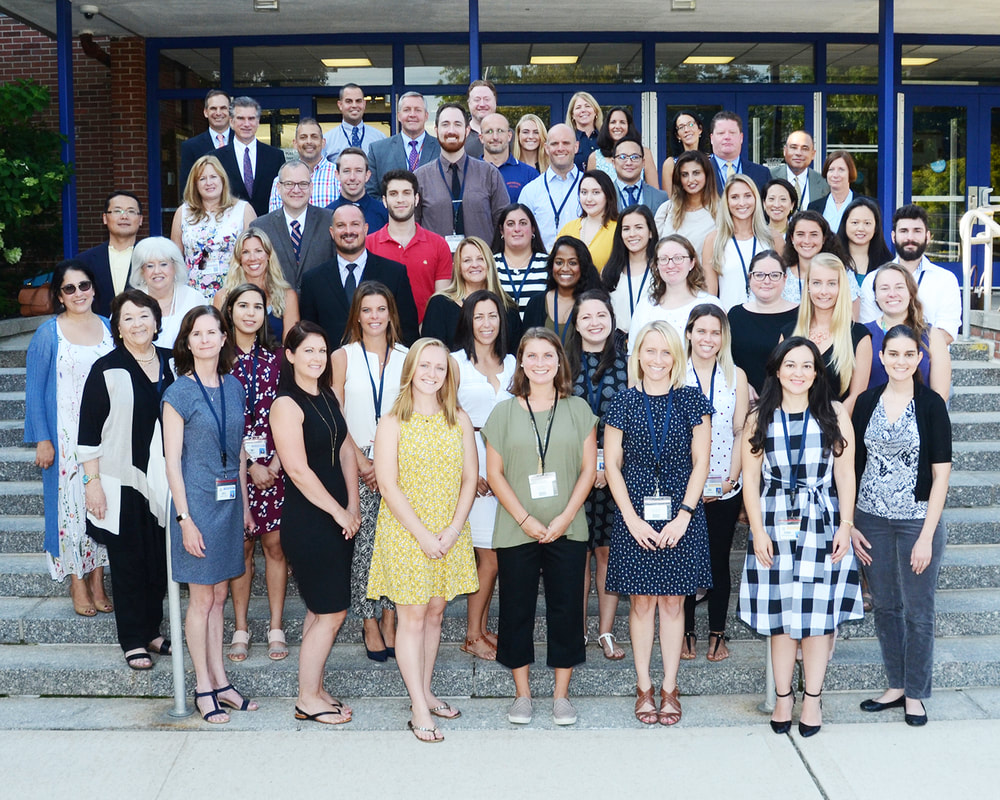
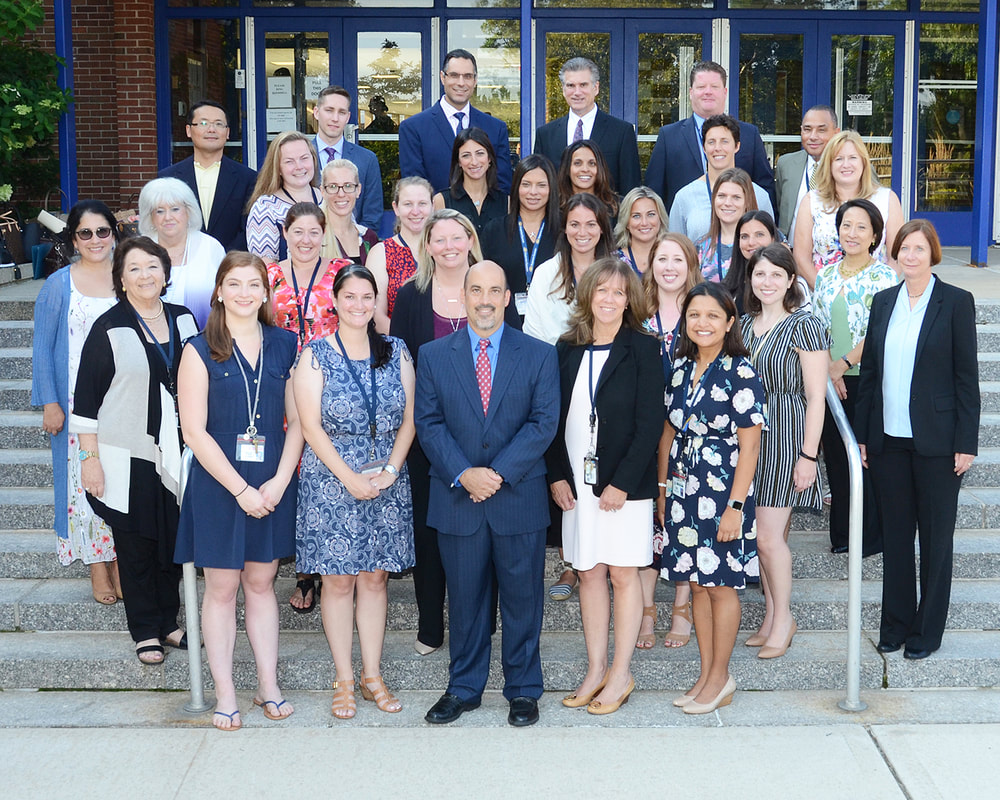
great neck welcomes new teachers!

9/4/2018

 
Picture
Picture

Dolores huerta: why unions matter

8/8/2018

 
According to labor leader and civil rights activist Dolores Huerta, unions matter much more than most of us think. 
“I think young people are skeptical of unions because they don’t know what unions are,” she explained. “The reason that young people don’t understand about labor is because we don’t teach labor studies in our schools. Young people don’t know how did we get the eight-hour day? How did we get the weekends? How did we get unemployment insurance? Disability insurance? How did we get public education? Social Security? Safety standards? These are the benefits that working people have, that were fought for by labor unions and people who died to get these benefits.”
Huerta is a lifelong activist for workers’ civil rights. Alongside Cesar Chavez, she helped organize the 1965 Delano grape strike, which brought national attention to the plight of farm workers. Through her life, she has remained a strong critic of inequality.
“Working people are the majority of the people in our United States of America,” she said. “Labor unions are the ones that really create the middle class. If we eliminate the middle class, then we don’t have a real democracy, because the majority of people in the United States are workers.  

WATCH THE VIDEO BELOW:

https://nowthisnews.com/videos/politics/dolores-huerta-on-why-unions-matter

<<Previous
Forward>>

    Archives

    March 2024
    March 2023
    October 2022
    September 2022
    March 2021
    December 2020
    October 2020
    September 2020
    August 2020
    March 2020
    February 2020
    June 2019
    January 2019
    December 2018
    September 2018
    August 2018
    June 2018
    May 2018
    November 2017
    April 2017
    March 2017
    February 2017
    January 2017
    December 2016
    November 2016
    October 2016
    September 2016
    August 2016
    June 2016
    May 2016
    April 2016
    March 2016
    February 2016
    November 2015
    October 2015
    September 2015
    June 2015
    May 2015
    April 2015
    March 2015
    February 2015
    January 2015
    November 2014
    October 2014
    September 2014
    July 2014
    June 2014
    May 2014
    April 2014
    March 2014
    February 2014
    January 2014
    December 2013
    November 2013
    October 2013
    September 2013
    June 2013
    May 2013
    April 2013
    March 2013
    February 2013
    January 2013
    December 2012
    November 2012
    October 2012

    Categories

    All
    Accolades
    Affiliates
    AFT
    Board Of Education
    Bylaws & Constitution
    Community
    Contract News
    Curriculum
    Defensive Driving
    Education News
    Elections
    Financial Aid Fund
    GNPS Budget
    Healthcare
    Inservice
    Legal Services
    Member Benefits
    Mentoring
    New Members
    Newsletter
    NYSUT
    Organizing
    Political Action
    President's Report
    Required Reading
    Resources
    Retirement
    Scholarships
    Selection Committees
    Social
    Summer Scholarships

    RSS Feed

Great Neck Teachers Association
NYSUT, AFT-NEA, AFL-CIO #2686 | The Cottage • 343 Lakeville Road • Great Neck, NY 11020 
[email protected] | 
@greatneckta.bsky.social
516-829-9070